BASICS / Journal
Reading the label: polyphenols, acidity, harvest year
The words extra virgin tell you very little. Where to look on a label to find the real thing, starting with what the numbers mean.
Olive oils on a supermarket shelf all look alike. Extra virgin on every one, and inside, freshness and character all over the place. Once you can read the numbers on a label, the way you choose changes.
1. Acidity
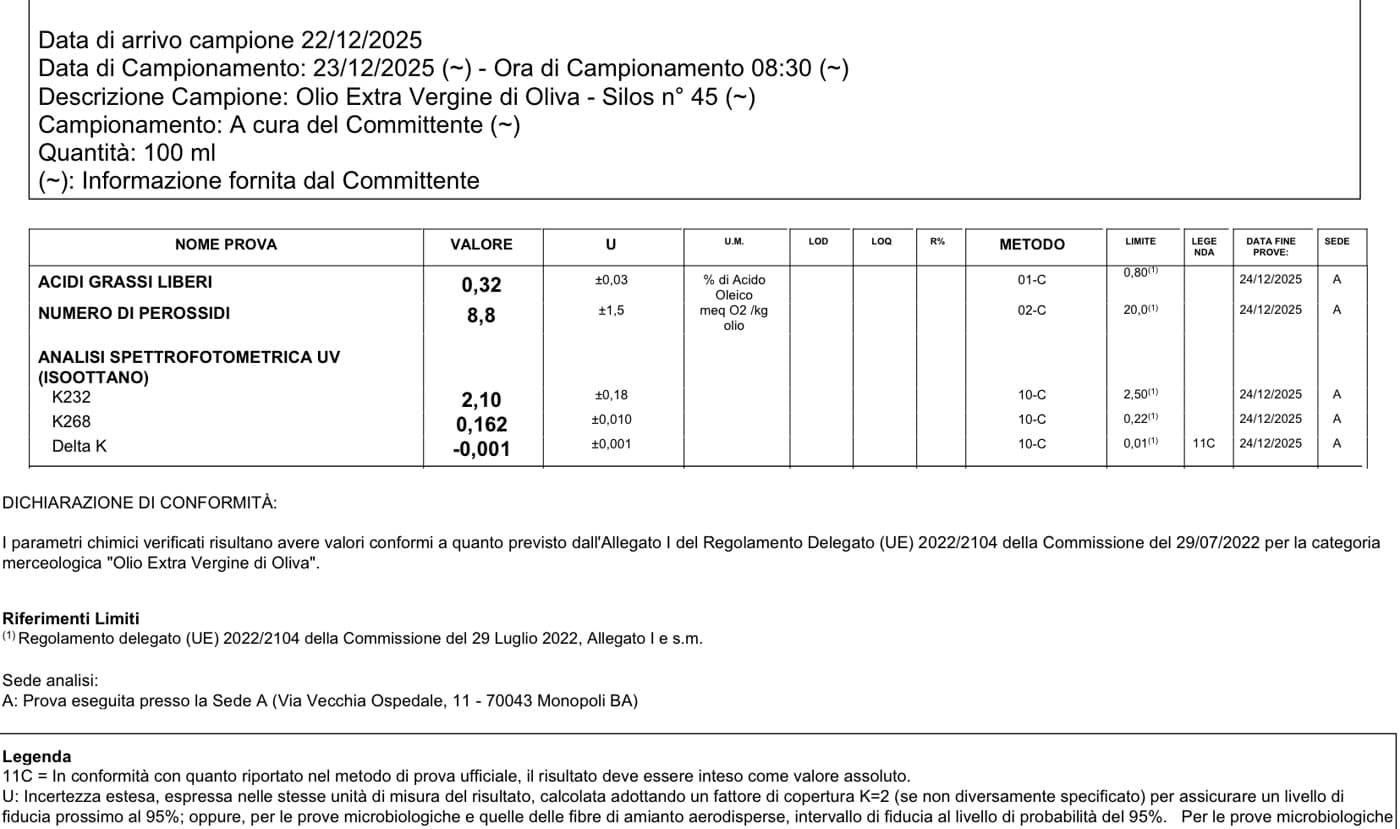
Free acidity measures how little the oil has degraded. The international standard for extra virgin is 0.8% or below, but a fresh specialty oil is usually under 0.3%. The lower the number, the closer to freshly pressed.
2. Polyphenol content
These compounds are behind the bitterness and the catch in the throat, and they come up often in health contexts. The figure is in mg/kg, but what matters is the method. Total polyphenols, HPLC, NMR: a different method gives a different number. A big figure with no method printed deserves some caution.
A number only means something next to its method. That is why Olive1 prints the method and the month of testing.
3. Harvest year and pressing date
Olive oil is fresh produce. It does not age like wine. Freshly pressed is best. Look past the best-before date for a harvest year or a pressing date. A producer who prints them is confident about freshness.
4. Origin and variety
Arbequina is gentle, Coratina is forceful. Variety sets the direction of the flavor. Single origin or blend matters too. Knowing the grove and the variety gives you far more to go on than a label that says only Product of Italy.
A label is a letter from the producer. The bottle that hides no numbers is the one with the most to read.
Olive1 publishes polyphenol content, test method, acidity, harvest year, origin, variety and pressing date, on the product page and on the label. So that next time you choose, the evidence is already in front of you.