HOW-TO / Journal
How to tell a good EVOO: freshness, polyphenols, acidity
A good olive oil is not decided by variety or origin. Three conditions, and a throat test you can do at home, from a conversation with a producer on Shodoshima.

How do you pick a good olive oil? Not by the name on the bottle. What matters is how fresh it is, how much polyphenol it holds, and how low its acidity has stayed. Here is what a producer at a mill on Shodoshima told me, with a way to check it at home.
1. Freshness: olive oil is fresh produce
Start here. Extra virgin olive oil behaves like fresh produce. Within a year of pressing it is in its proper, fresh, best state. It does not get better with age the way wine does.
The problem is distribution. However good the oil, after a sea voyage and a long stay in a warehouse and on a shelf, a year passes and it oxidizes. So, the producer says, what matters is not how famous the name is but whether the oil has deteriorated.
You can feel it in the mouth. Fresh oil is light and clean. Once oxidation sets in, it turns heavy and sticky, like cooking oil.
2. Content: polyphenols and green oil
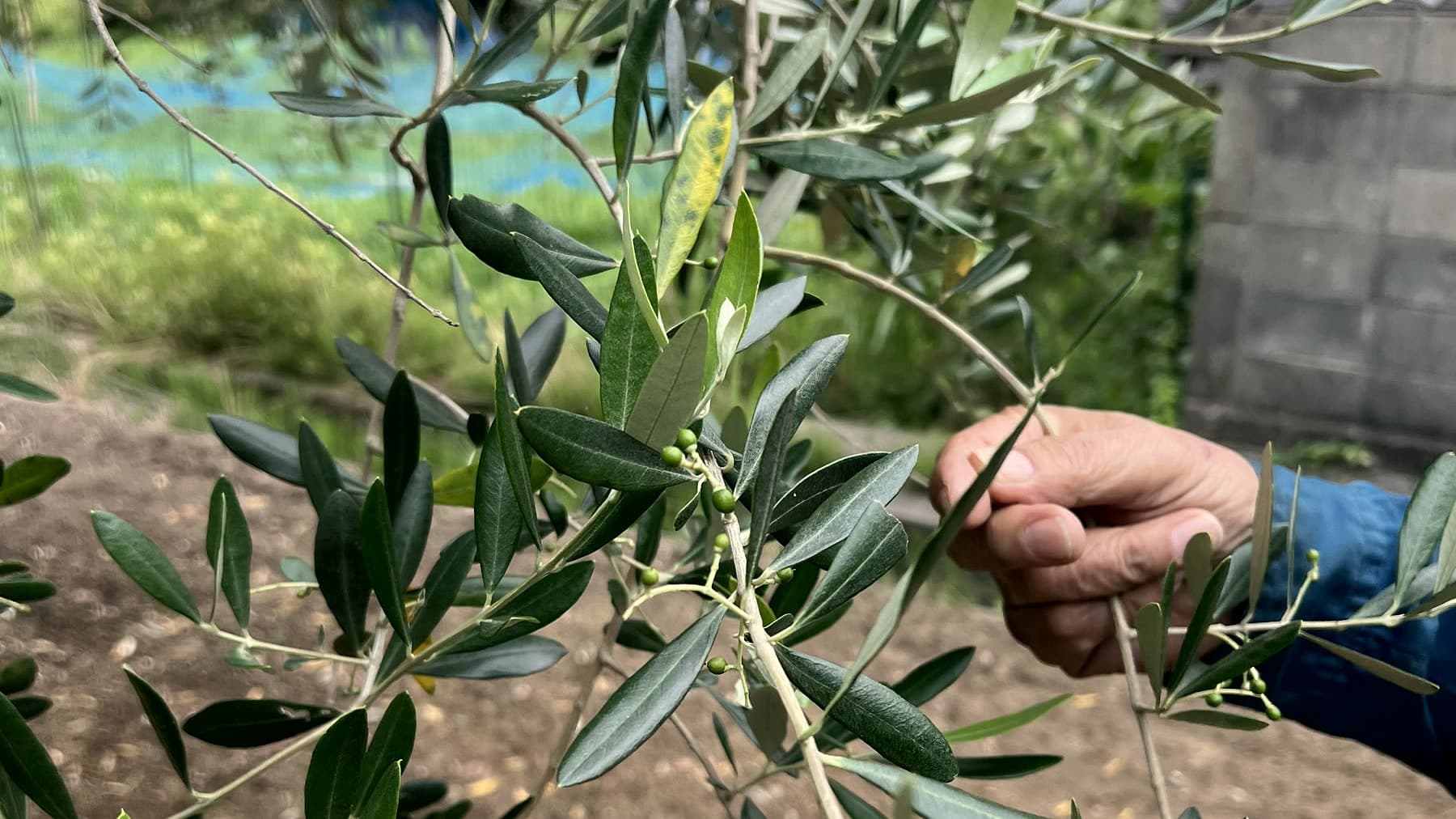
One marker of a good oil is a high polyphenol content. As olives ripen and turn black, they yield more oil, but their polyphenols drop.
So some producers give up yield and press only green, unripe fruit. Less oil, but the most polyphenols. That peppery catch in the throat comes from these compounds, oleocanthal among them.
3. Acidity: lower takes more skill
Free acidity is a chemical measure of how little the oil has degraded. The international limit for extra virgin (IOC) is 0.8%. Kagawa Prefecture's own standard is 0.3%. The best producers hold it at 0.1 to 0.2% or lower.
That number is not luck. It comes from how fast the fruit gets from the tree to the mill, and how tightly the temperature is controlled during pressing. Speed and care show up directly in the figure.
Read numbers together with the method. Acidity and polyphenols both change with how they are measured, so Olive1 prints the method and the month of testing.
The throat test, at home
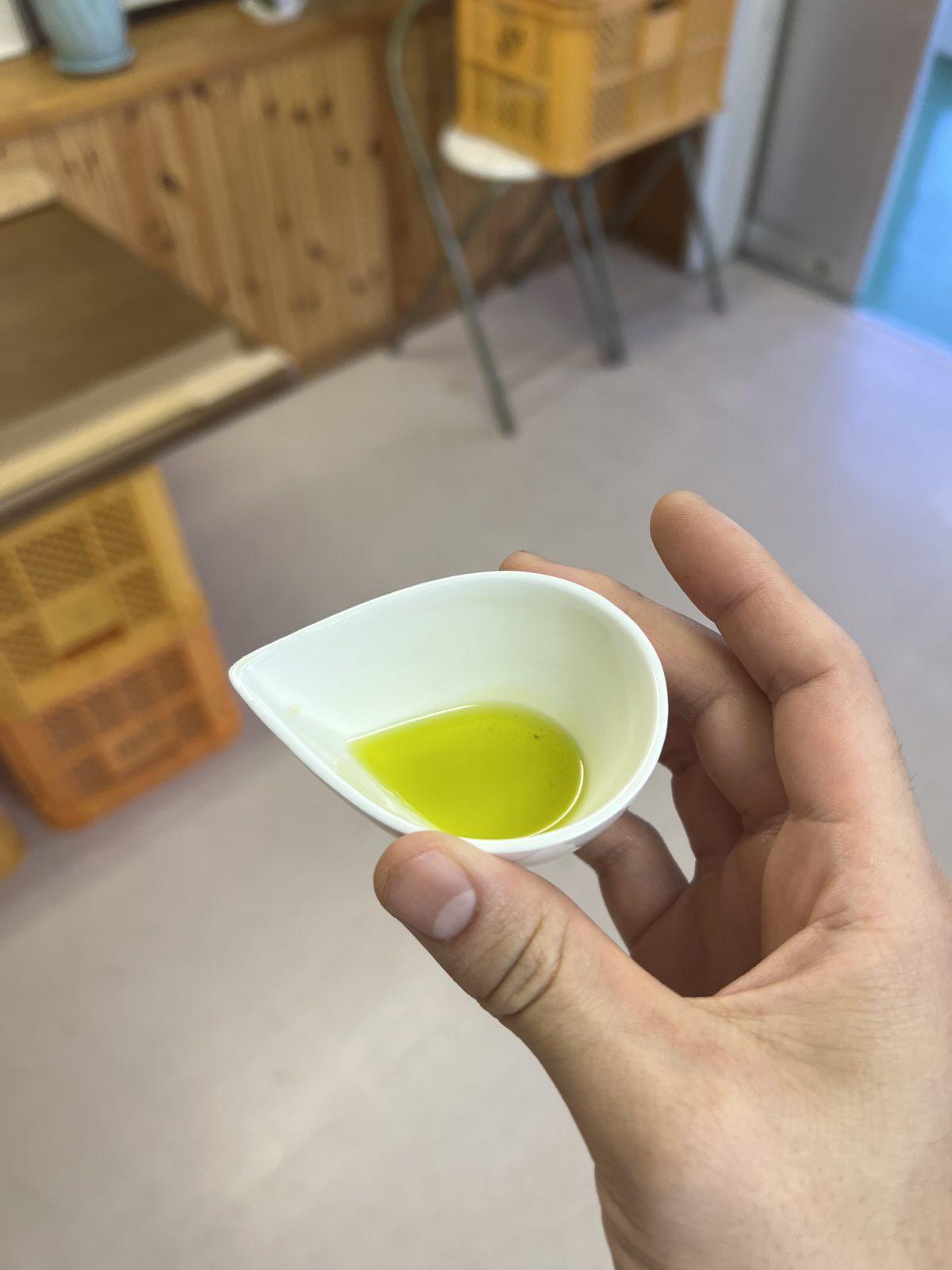
You can check all of this with your own throat. No special tools. A small dish, a spoon and your own throat are enough.
- Pour about a teaspoon into a small dish (room temperature is best; warm it in your hands if it is cold)
- Cover the dish with your hand, swirl a little to release the aroma, then smell for green notes
- Take it into your mouth and roll it over your whole tongue, noting bitterness and fruit
- Swallow slowly and feel for the peppery catch left in your throat
Three signs to look for. A green aroma, like cut grass or green apple. A light bitterness at the back of the tongue. And a peppery catch in the throat after swallowing. If instead it is just oily, with no aroma and no pepper, heavy and sticky, or smelling of old oil, the freshness has gone.
How strong the pepper is tells you about character, not quality. A strong oil sharpens a dish. A gentle one is easy to use every day. Choose by what you will do with it and you will not go wrong.
In short, a good oil is not a brand. It moved fast from harvest to press, its acidity is measurably low, it is rich in polyphenols, and it has not deteriorated. Olive1 publishes polyphenol content, acidity and harvest year with the test method, and is built around delivery that keeps the oil fresh.
Watch